
AI in product & engineering: from hype to real impact
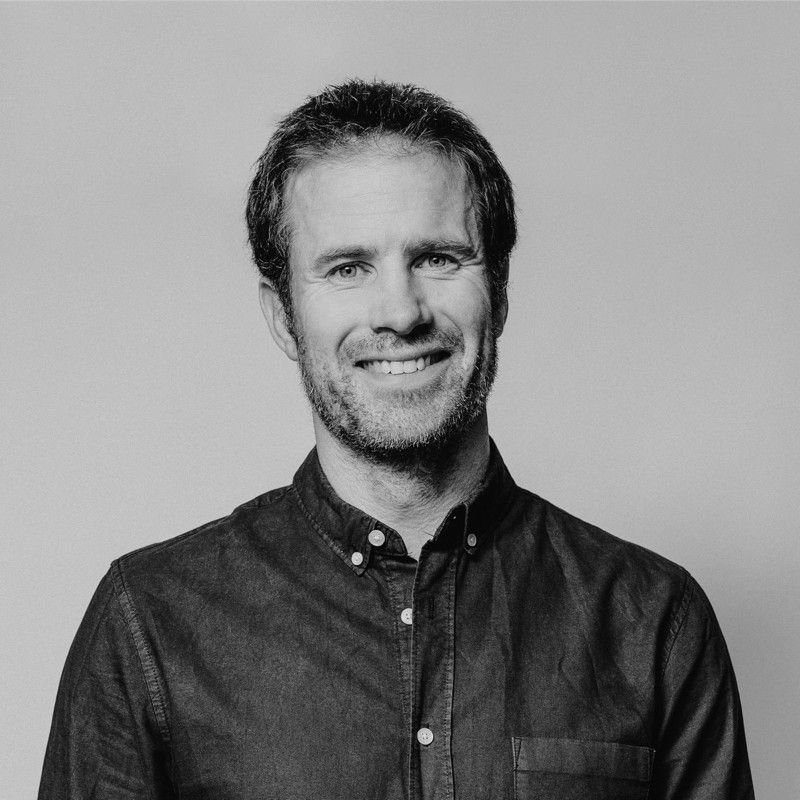
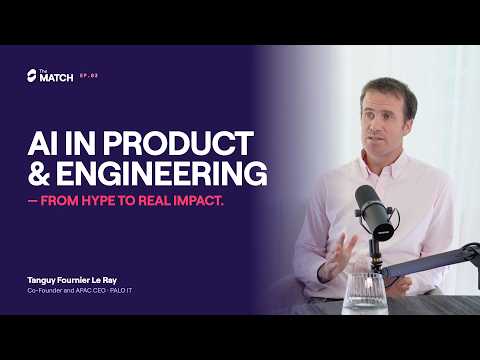
The reality is that in order to get any productivity uplift from AI, it requires a complete change of your ways of working and the way you build products and software.
Transcript
Welcome to The Match. Meet the minds behind the work. Insights from the best specialist and independent agencies, presented by StudioSpace.
AI is dominating every conversation right now. But for most organisations, the challenge isn’t understanding its potential — it’s actually applying it in a meaningful way. Today I’m joined by Tanguy, Co-Founder and APAC CEO at PALO IT, a global AI-first consultancy focused on building digital products and experiences and helping organisations modernise their business platforms. PALO IT was Microsoft GitHub’s Partner of the Year in APAC in 2025, recognising its leadership in AI-driven software engineering. So I couldn’t have thought of a better person to talk to about where everything’s going with AI and how organisations make the most of it. Tanguy, let’s start with the big picture — how do you see the AI landscape at PALO IT today?
It’s been a bit over three years since ChatGPT launched, and what we’re seeing is a big gap between the startup world and cutting-edge Silicon Valley companies that are very invested in AI — especially in software engineering and product development — and large enterprises that are still debating whether they should move into it, still doing small pilots or proofs of concept. The most advanced side of the market is getting productivity gains that are extremely high — above 50% on multiple projects and across their teams — versus enterprises that are seeing maybe small benefits on a pilot, but nothing significant at a company level.
It does seem like we’ve got two extremes going on. There’s all this excitement about vibe coding and one-person startups being able to build incredible products using AI — but then at the other end we’ve got long-standing large corporates and enterprises still exploring how to make the most of what’s now possible. Why are those larger, legacy enterprises struggling? Why is it hard?
There are a few things. The first is that the level of complexity they’re dealing with is a lot higher — they’re highly regulated, they have security, cybersecurity and compliance constraints. So it’s harder for them to unlock the capabilities that AI can demonstrate. But it’s not just the complexity — it’s also that they don’t like change. Change is really hard in a large enterprise.
What we’re seeing is that the more you invest, the better ROI you get in that space. But a lot of large enterprises want the benefits without much appetite for large-scale transformation of their ways of working. And so, obviously, they don’t get the ROI that smaller companies have been able to get — mainly because of those two reasons.
There’s a lot at stake for them in the ways you describe. And pick any large corporate — they already have many large-scale delivery initiatives underway that they can’t afford to slow down. To really get these benefits is a complete shift in their way of working and delivery. So where do you see the leaders among those larger, more traditional corporates getting this right?
The first thing is that it’s not just about deploying tools. Whether you deploy Claude Code, GitHub Copilot or Cursor is one step, but on its own it doesn’t generate any productivity benefits. A big misconception in the industry is that most of those SaaS companies sell the tools and tell customers that’s all you need — “we’ll do a quick training on the features and then you’ll be able to build all your products with AI.”
The reality is that to get any productivity uplift it requires a complete change of the ways of working and the way you build products and software. And that’s difficult, because you’re talking to an industry that has done the same thing for the past 15 years. Engineers were trained at school, and then through their whole career, to follow those steps and that delivery model. Overnight, we’re telling them: forget everything you’ve done for the past 15 years, here’s a new way of working, you won’t touch the code — AI will generate all of it and you’ll be in the back seat reviewing that the output is correct. It’s a big change. Some people love it, but in most large enterprises there’s big resistance to it.
So it really is a ways-of-working shift, and you need to commit to that new way of working to get the benefits. If you’re just experimenting, or caught somewhere in the middle — partway adopting these new ways and tools but still delivering in your traditional methodologies — you probably end up in the worst of both worlds. It’d be good to understand the journey you’ve been on at PALO IT, because I’m sure you didn’t get the recognition you’ve had accidentally. That’s been a deliberate set of steps.
In 2023 we deployed GitHub Copilot to all our teams — about 500 developers — hoping for great results. What we saw was pretty much zero productivity benefit and low adoption. Our teams didn’t actually like it. So in late 2023 we weren’t very positive about it, but we couldn’t believe we weren’t missing something. So we thought: we need to forget what we’ve done for the past 15 years, start from a blank sheet of paper, and completely reinvent the way we build software to be AI-first rather than just AI-augmented.
We started doing that on a few internal projects and saw outstanding productivity benefits. We could generate 95% of the code with Copilot, at a quality better than our best engineers could have ever produced. And it wasn’t just the code — it was all the requirements, the design, the architecture diagrams, infrastructure as code. The entire product got generated by AI. But for this to be accurate we needed two things: one, to set up very detailed context fed into the repository; and two, customised rules that act as guardrails around Copilot to constrain the AI.
That’s what we started to see in 2024. From there we saw the opportunity, but we also saw the pressure: if we don’t change, we won’t have a business in the next three years. So we told all our teams that this is the direction we’re taking — if you’re not interested or not going to embrace it, there’s no place for you in the organisation. It felt extreme at the time, but now what we say is that we’re not only doing it for the organisation, we’re doing it to protect your careers — because if we equip you with those skill sets, you’ll have knowledge that is in high demand in the market.
It’s clear you’ve been able to get the benefits by committing to wholesale change as a business. From what we see in the market, the shift you’ve made so quickly in how you deliver is pretty unique. And I’d imagine the productivity gains you’re seeing are only improving as the models improve.
For sure. We started seeing 50%; now, on some projects with large enterprise clients — banks, insurance companies, airlines — we can reduce the number of man-days on a project by four. So the productivity benefits are really high, and we’re just starting with agent orchestration as well. The models are getting better, the tools are getting better, which means the productivity gains are only increasing. It will probably plateau at some point, but over the past 18 months we’ve had to adapt our ways of working and the way we build product every month to keep up with the progress of the LLMs and tools. It’s not easy, but the gains are high enough to make it really worth it for any organisation able to do so.
Let’s make it a bit more tangible. Have you got an example you could walk us through — because I know this is a whole different way of thinking about the way of working and the end-to-end product lifecycle in order to really get those productivity benefits?
Of course. Let me take one of our early adopters — Singapore Airlines. We started working with them in January 2025, the same way we start with all our clients: a pilot project. It’s not a proof of concept — it’s one of their actual projects. We bring a small team from our side, help them set up the repository in our Gen2 methodology, customise the rules, train their team, and then start delivering the project with AI generating the entire product.
That first project was delivered in five weeks instead of the eleven forecasted — around 60% productivity benefit. It was to redo the meal-selection feature on the main booking platform, so something quite small. Then they said, “Maybe you got lucky — let’s try three other projects that are bigger and more complex.” We did, and the benefits were very similar: between 50 and 65%. That was proof it worked in their context. Then we helped them scale these ways of working across the entire tech and product team — about 1,400 people — training them not on the tools but on the ways of working, and coaching them along the way. Now all their teams work that way. At an enterprise level it’s probably more around 15–20%, but it’s only increasing. And now we’re in discussions on more projects leveraging the latest progress in agentic orchestration.
Let’s definitely come back to agentic, because I know you’ve got a bit to say on where things are going. But staying with that example — it’s incredible how quickly things are moving. That was about a year ago. What lessons did you and your team take from that experience that you’ve applied elsewhere?
What we’ve learned is that training alone isn’t sufficient — even training on the ways of working. It really requires our customers to have teams of champions who become the experts and then spend time with their own teams. We act as the experts in the first few months, but the objective is to transition that to the customer, so they have people who live and breathe AI in tech, who are at the forefront of understanding the latest capabilities of the tools and models, and who bring that knowledge into the organisation.
The transformation isn’t just change management. It’s also revisiting the processes around software delivery, because those processes are what can really slow an organisation down. If you keep the processes from when you delivered in agile, but now it’s all done by AI and it’s a lot faster, those processes become bottlenecks at every step. So it’s about helping customers find the bottlenecks and evolve their processes — and also how they measure performance, because unless there’s an incentive for people to embrace this, quite often they don’t see the benefit for themselves.
I want to come back to something you’ve touched on a couple of times — we’re not just talking about AI-driven engineering here, you can apply this across the product lifecycle. What does this mean for things like customer research or design when you’re building new products?
This is really interesting, because you can get AI to generate all the research, and now the design and user experience too. Again, you need the right rules to implement the design system into VS Code and Copilot so AI understands exactly how the experience and design should look — but then you can generate all of it. It also means you can generate end-to-end prototypes extremely quickly, which is really good for business stakeholders. We even have customers asking how to get their business stakeholders — not just product people — onto those tools to generate a prototype of what they want.
It’s a lot better to see a prototype than a 20-page requirements document. So it’s helping the quality of the product too: rather than writing specs on a page, business stakeholders and product people can show a prototype of what they want, then have the discussion with the tech people and designers — does this make sense, can we build this, is it viable? It’s completely changing the world.
And I guess those pieces of work become living artifacts. They’re not static from the point in time they were developed — they evolve as the product develops.
Yes. We store all the context in a repository, AI has access to it, and the repository becomes a source of knowledge — the source of truth. It constantly gets updated: once you’ve launched a product, you can re-inject customer feedback and user-testing findings into it, so the repository is always up to date, and AI keeps all your product documentation up to date — which has never happened in our industry. It also means you can generate new features based on the feedback you’re injecting. So you can launch products faster and cheaper, but also products that are a better fit for your market and better fit for purpose.
So what does that mean for team structures? How do you now think about the types of people, the roles, and the structure of teams to deliver in the way you’re describing?
On the engineering side, we don’t have software developers in our organisation anymore. It’s been over a year that nobody codes. You cannot code, you should not code — you change the context, adjust the rules, get AI to generate, and our engineers review the output. So instead of spending most of their time coding, they focus on building the right product, the best product possible. Coding is solved, and the quality that gets generated is generally better than what software developers can do.
So we’re evolving from software developers to product engineers who understand the business as well as the tech, with a more end-to-end understanding — architecture, infrastructure. On the design and product side there’s now a really blurry line. A good product person who’s well across these ways of working and tools can generate the design and the front end and have a prototype pretty much on their own, then work closely with engineers to generate the actual product. So we’re seeing roles that are more polyvalent and end-to-end, rather than very narrow and specialised as we used to have.
So a quite different way of organising and teaming to deliver products. There’s also a moving target — the tools are evolving all the time, which is hard for big organisations because of the risk management and security postures we talked about. How do you advise big organisations to stay current on top of all this?
We advise them not to build their own tools. It’s almost impossible for a bank, an insurer or a telco to keep up with the pace of progress from the biggest players — whether it’s Anthropic with Claude Code or Microsoft and GitHub with Copilot. They have large teams dedicated to it, and now they get AI to generate most of it. So get those AI tools off the shelf, because they’re always going to be ahead of the game; trying to build your own probably won’t help you much in terms of ways of working.
We’ve seen a first change — AI-first engineering — changing the steps, putting that context into the repo, not coding anymore. That was the first wave. The second wave we’re seeing now is having agents that can be orchestrated to build your product asynchronously, which requires a different delivery model. We don’t see another big change coming after that — but it’s hard to say. So what we tell customers is: the first step is really AI-first engineering, getting everyone across that, and then the next wave is getting agents to do most of the work. That will evolve the delivery model a little, but the change will be a lot smaller than what we saw going from agile to AI-first engineering.
And I guess the same ways of working, the same principles, apply — but now scaling through agents.
Exactly. And if anything, it means the context is even more important. For example, now, instead of storing the context in a repository, we store it in graph and vector databases, with relationships between the different artifacts of the context. Why? Because if the context isn’t extremely accurate, agents just generate something low quality or not the output you expect — so it’s useless. Agents can be amazing, but they need to be really well constrained and guided.
Tanguy, this has been a fascinating conversation. It’s incredible to see how quickly things are moving, and the shift you’ve made in a relatively small time as a business. For business and digital leaders watching who might be new to this and haven’t started the journey yet — what’s one thing you’d tell them to do now?
I’d say the more you invest into AI, the better ROI you’re going to get — there’s no in between, in a way. But it’s also important to do it in a manner that factors in the constraints of your organisation, otherwise you won’t get the value you expect. AI works really well in software engineering and product development — it’s been proven, even in the enterprise space — and it’s only going to get better. So it’s really time to invest, but do it keeping in mind that yes, you have constraints — compliance, security — and all of this needs to be embedded into your future AI-first delivery model.
So commit to it, but also recognise it for what it is — yes, a technology shift, but more so an organisation and operating-model shift you need to make to get the benefits.
Yes, exactly.
What’s the biggest misconception about AI right now?
The biggest misconception, if I look at the enterprise space, is that it’s all about the tool and only about the tool. In reality, yes, you need the tool — but what you need is to completely change the ways of working and the way you build software and product if you want to get the value out of it. And because change is hard, a lot of leaders don’t really want to go in that direction. They deploy the tools and hope they’ll get the ROI. But for a large enterprise it’s going to be a long journey — it’ll take years to transform. That might not be what the big tech companies are selling them, but that’s the reality on the ground, and not many people are talking about it.
Why are most enterprises still stuck in small-scale experiments and pilots?
Because most enterprises don’t really have a clear AI-first SDLC or delivery model that they can roll out across the entire organisation. Usually they let their top 2% of engineers — the people passionate about this — do a few experiments and demonstrate it can work on some projects. But unless they have a plan for their SDLC, for how they’ll roll this out across the whole organisation, the investment required and the impact on the business, it will always remain at the experimentation level.
What’s one thing organisations should stop doing with AI?
They should stop thinking it’s going to be a quick win. It’s going to be a long journey, and it’s going to require them to transform the organisation. Yes, it starts with software and product, but soon they’ll have opportunities for agents across all the non-tech functions too. For those departments to adopt them, it’ll also require changing the way they assess performance, the way they structure teams, and having a clear AI strategy across the entire organisation. So it’s not just about deploying the tool, or doing small pilots or prototypes — it’s about how you invest now, and how that enables you to be ahead of your competition in the next two to three years.
Increasingly, companies are talking about the potential of agents in their business and with their customers. How do you see agentic evolving, and what’s next in that space?
It’s an amazing breakthrough and it’s going to be a big change. With AI-first engineering, a human pairs with an agent and reviews every step the agent produces — a one-to-one relationship. With the latest progress in the models, we’re now going to be able to do agent orchestration: one human defines the intent, sets up the context really well, customises the rules, and then has one or multiple agents go and generate the entire product or piece of software. The review happens at the end, when everything is generated.
What’s fascinating is that we used to deliver technology projects eight hours a day, five days a week — a 40-hour window to generate something.
You’ve got a team that doesn’t sleep now.
Exactly. If it’s orchestrated well, you have a team that doesn’t sleep, can work on weekends, and can generate an entire product. The best part is you can have them working in parallel — so it’s not only a much bigger time window, it’s also a pace of execution that’s unbelievable. It’s not easy; it’s more complex to get the output to a high quality. It requires the setup to be extremely precise and the context to be really well detailed. But when you get it right, you’re talking about multiples of productivity benefits — anywhere from five to ten times faster — which even three to six months ago was impossible for us to think. It’s not completely there, and there’s big hype around it. Does it work in the enterprise space? Not just yet. But at PALO, that’s what our teams have been working on around the clock over the past three months. It’s going to be the next exciting phase for us and for our customers.
Amazing — so you’re already seeing it. The future of your team is humans plus agents.
Yes, exactly. It’s a big shift, but the capabilities and potential it’s going to unlock will be tremendous.
Thank you, Tanguy. That has been the most fascinating conversation. I certainly learned a lot, and there are a lot of lessons from your experience to share with organisations looking to make this transition. Thanks for making the time.
Thank you, Robin, for having me.
Want access to the best specialist marketing and digital services? Check out StudioSpace — the agency marketplace and procurement solution that gives big brands a faster, simpler, and more flexible way to access the most extraordinary agencies.
 StudioSpace 2026