
Brief the business problem, not the ‘ad campaign’
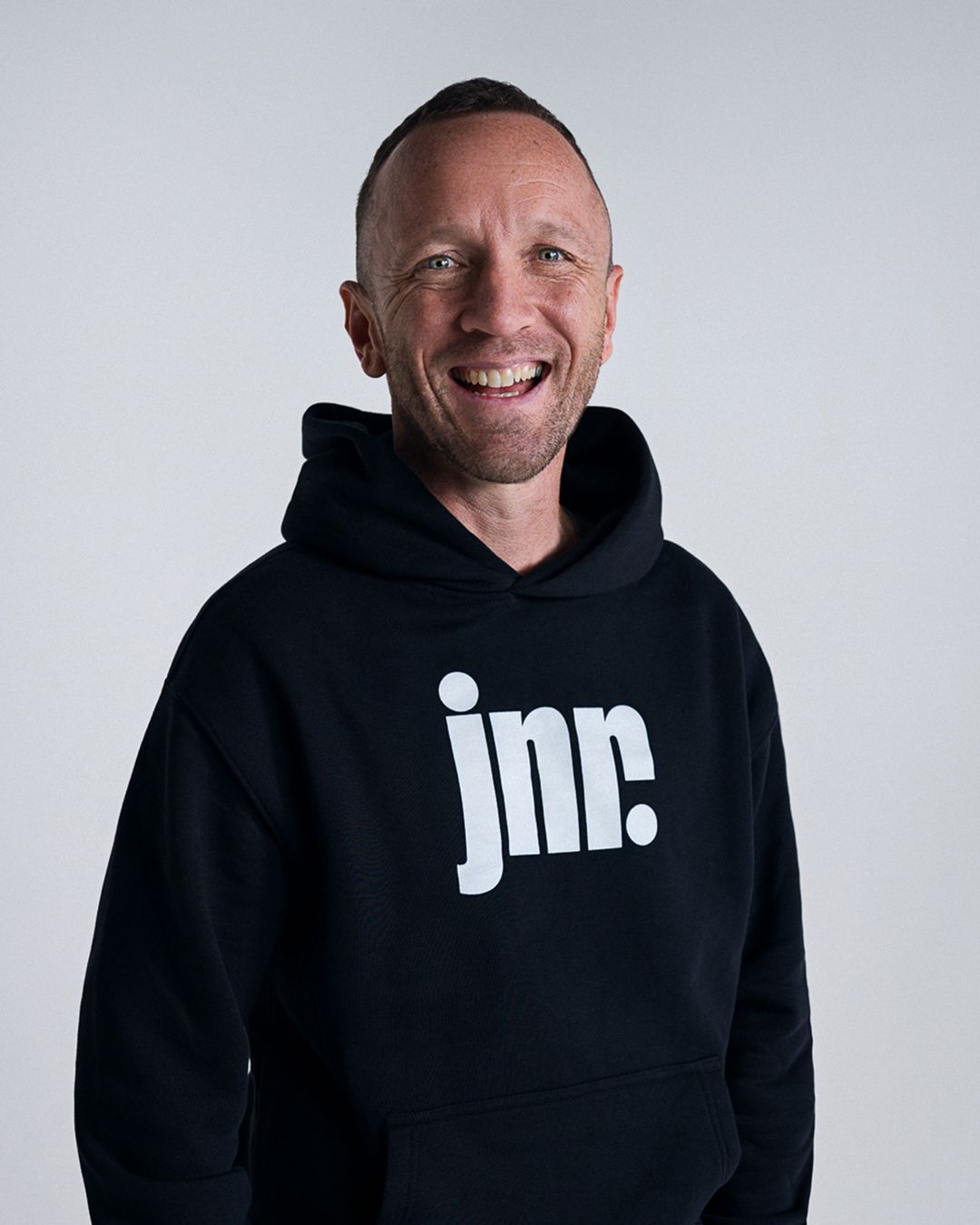

The role of the strategist is to be the voice of the consumer in the agency — which is just a fancy way of saying you need to be objective. You’re not thinking of the output, you’re thinking of the audience.
Transcript
Welcome to The Match. Meet the minds behind the work. Insights from the best specialist and independent agencies, presented by StudioSpace.
Most organisations still brief their creative agencies to deliver ad campaigns. But the challenge with that is that by jumping straight to a campaign brief, you might be missing out on more creative solutions to the actual underlying business problem. So today I’m joined by Ryan O’Connell, Chief Strategy Officer at indie creative agency Jnr. Ryan’s got a strong point of view that brands should really be briefing their creative agencies on their business problems, not on ad campaigns.
Ryan was previously Chief Strategy Officer at Ogilvy — a very well-known global agency — during which time he was named Strategist of the Year by Campaign Asia three years running: 2021, 2022 and 2023. He also helped the agency win numerous awards for effectiveness through creativity. So he knows what he’s talking about. A couple of years ago he decided to start a new indie creative agency, Jnr. Ryan, to kick us off — tell us what led you to start Jnr, and a bit about the work the agency does.
On my first day at Ogilvy I sat next to John Marshall. He was the suit on Nestlé and I was the planner on Nestlé, so we started working together on the same account my very first day. Within about a month we realised we shared a lot in life and became best mates. Over the next four or five years we spent many late nights — maybe after a few beers — talking and dreaming about opening our own agency. That continued until at one point our wives said: if you guys don’t stop talking about it, we’re going to kick your ass. Either do it or shut up. So that was the go — maybe we should actually do this.
The next part is, what are you going to call yourselves? How are you going to brand yourselves? If you’re going to ask clients to trust you with branding, you’d better be pretty good at branding yourselves. We both thought it would be a long, awkward conversation, but within about 15 minutes we’d landed on a general positioning based on our attitudes towards the industry and the work. We wanted to hold on to the enthusiasm, the energy, the passion, the optimism you have as a junior — you’re wide-eyed, you’re curious, you’ll say yes to anything, you’re always keen to help out. So Jnr fell off the back of that. It’s a nice reminder every morning to hold on to that curiosity, that passion, that energy. From the time we made the decision, it was about six months until we launched.
I love the story behind the name Jnr. For me, it captures so well what’s special about indie agencies — the power of an indie, and what makes one different as a client. So let’s talk about what we mean when we say brief your agency on the business problem, not just on an ad campaign. What’s the difference between briefing an agency on a business problem versus an ad campaign?
It can sound like a subtle difference, but the reality is: if you brief an ad campaign and expect an ad campaign back, that’s what you’re going to get. And that may not be the solution to the problem. Thinking more upstream and briefing the problem opens up the aperture of what the actual solution might be.
As a strategist, I also have a personal point of view that briefing problems in helps the agency understand the entire business a little bit more. So even if the solution does end up being advertising or communications, having a broader understanding of what the business is going through — the challenges, the problems it’s facing — gives you a broader context. And that broader context helps you create better comms anyway. But if you’re always expecting an ad campaign, you’re limiting what the solution can and should be. Nine times out of ten it probably shouldn’t be an ad campaign, if you’re being agnostic about what the solution should be.
Why do you think that still happens? We talk a lot about the power of creativity to solve business problems, not just to deliver great communications — so why does this still happen in organisations?
There are two sides of the spectrum. From a client perspective, they treat their ad agency like an ad agency — and that might be because that’s the only kind of solution they’re getting back. So ad agencies may have painted themselves into a corner by being pigeonholed that way, because every solution they come back with is just that. From an agency perspective, they’ve probably done some damage to themselves by always coming back with communication or advertising solutions. You probably need to do a better job of positioning yourself to come back with solutions that aren’t advertising — and then clients will perceive you a little differently as well.
It becomes a bit of a cycle — a two-sided thing as to why we fall into this trap of always briefing the campaign, rather than how best to explore and solve the business problem. How do you look at this differently now that you’re running an indie versus where you came from?
Honestly — and this isn’t to knock previous agencies I’ve worked at — agencies have traditionally made a lot of their money through the margins on production. That’s just the reality of how the business was set up. With that comes either the intentionality that you go back with advertising solutions because that’s how you make money, or — not always as Machiavellian as that — a muscle memory of “we’re an ad agency, we make ads.” You fall into a certain pattern and habit of coming back with the same solutions because that’s what you’ve always done.
Part of the attraction of opening our own agency, with no global overlords or boards instructing how you make money, is that you can come back with solutions that are right. At Jnr we don’t make our money off the production process — there’s not a large margin to be made there for us, because we set the business up differently. We charge for strategic thinking and creative thinking. That means we’re not beholden to coming up with a solution that requires large-margin production, because that’s not how we make money and it’s not how we’re inspired. It’s liberated us to come back with solutions that aren’t always advertising.
It’s not what your incentives are driving you to do — you can be genuinely agnostic about what the solution might be. Has that led you to think differently about how Jnr grows, the type of people you’ve got, or how you’re set up as a business?
One of our very first hires was a design director, because a lot of the briefs we were getting — the solution was actually a brand redesign or a brand design system, rather than an advertising solution. Hiring a design director straight away differentiated us. As we moved into other avenues, PR became an important discipline for us too. A lot of agencies offer these things in some shape or form, but we hard-baked them into our offering early on, knowing the solutions we were recommending needed the personnel to match.
We’ve also been happy to work with partners for areas that aren’t our specialty. If the solution is something we’re not experts at, we’ll work with partners. That’s another advantage indies have — they don’t have large production departments, so they’re going to partner with someone anyway. That partner can just be a different type of partner: a product partner, tech, design, gaming, PR. Something still needs to be produced — but what you’re producing isn’t necessarily an ad.
That aligns well with the StudioSpace model — the client having the flexibility to get the right partner for whatever the solution might be. There’s probably also something in there for the client: when they work with an agency like Jnr, the people they’re working with are the most experienced practitioners on your team. That’s what you can do when you’re a specialist or an indie and not part of a bigger network.
That was a large driver in us opening Jnr. As you climb the advertising corporate ladder, you get further and further away from the actual work. We called ourselves Jnr because we wanted to hold on to the passion and enthusiasm we had as juniors — but you were also closer to the work at that stage. As you climb, you’re in management meetings, process meetings, profit meetings, global calls — and you’re not actually on the tools doing the work. We were keen to open our own agency so we could roll our sleeves up and go back to being a suit and a planner. That was a major motivator: getting back to being a planner, not a boss of planners.
Let’s make this a bit more tangible. We’re talking about wider possible solutions than jumping straight to campaigns. If we’re not jumping straight to campaigns, what else can those creative solutions be?
A great example from one of our first projects: we were briefed on a brand strategy that was going to end up in a brand platform — advertising. That was the brief, that was the expected output. As we got into the process and started to understand the business, the category, the consumer and the products, we realised the real solution was actually a name change to one of their products. The product wasn’t doing the heavy lifting of explaining what it was; they were known for other products but wanted to be known for this one. So the biggest recommendation in our strategic response was: you need to change the name of this product.
That ended up being not a brand campaign, not a product campaign — but it was the big unlock for that business. That’s a great example of briefing the problem, understanding it, and arriving at a bespoke solution. We were quite proud of it, because it was one of our very first projects, about six months into the agency, and we were already recommending a solution that wasn’t advertising. It was a product name.
From the client’s perspective, I imagine that was a much more effective solution than what might have been first imagined — and probably much more cost-effective. It’s not a big campaign they need to put lots of media spend behind.
With any strategic work, you do a lot of research and immersion, and then you have to validate your thinking. The validation for why they should do it was all there. In this instance, the strategic work led us to a solution that was completely validated and almost became a no-brainer — in the meeting where we presented it, a light bulb went off and the client said, that’s absolutely the right solution. Consumers still needed to know about the product change, so there were comms at the end as an awareness and education piece. But the core solution had nothing really to do with comms. If you’d jumped straight to comms, you wouldn’t have got to the right answer, because you’d have skipped the important part — which was actually the unlock.
But equally, I’d guess you needed an open enough brief at the beginning — starting with the problem — to give you the room to run a proper process, do that exploration, gather the insight and explore the options.
Yep. Correct.
Any other examples you want to talk to before we move on?
There was another where we were briefed on a brand strategy and the response ended up being a full brand redesign — right down to changing the logo and even recommending how they changed their office layout. It was a recruitment company that dealt almost exclusively in construction recruitment and wanted to branch into other categories like medicine. But their logo, aesthetic and brand design had anchored them in construction. To open up that perception among other audiences, their brand was almost holding them back — not the name, but the way the brand came to life.
So instead of a brand strategy and a creative platform, it was: we actually need to redesign your brand so you feel like you span those different categories and disciplines. We could have just jumped straight to an ad. But if you’re thinking ads, you wouldn’t have come up with that solution.
Does this broader frame change who’s typically briefing you today as Jnr?
It’s traditionally still CMOs, to be completely honest. I feel a little sorry for the modern CMO — their remit and responsibilities have changed so much over the last 10 years. That M in CMO is a lot more than marketing these days, and that’s good for us in many respects. If we have an ambition to be further upstream and have greater access to the problems facing their business, CMOs now have that range of problems they’re trying to solve. Their remit now covers a whole bunch of things the business might be facing — or opportunities it might have. So CMOs themselves have access to more of these problems that we actually want to solve. As unfortunate as it is for them how busy they are, it’s helped our ambition to have access to those wider problems.
We definitely see that too — the remit of the role is broader than ever. There are more channels than ever; they’re often also responsible to a degree for the digital transformation of their business, acquisition, retention, loyalty. Traditionally the creative agency would be the key strategic partner of choice for a CMO. How does that change what they need from their creative agencies as the role broadens?
From a strategic point of view, you’re a strong strategist if you’ve got access to as much information as possible. Even in the old days, when it still led to an advertising solution, you needed exposure to the different problems the brand or business was facing. As CMOs understand that you can solve different problems, it opens up their ability to trust you and see you as a credible option for more than just advertising. If you’ve grown with a particular CMO — and we’ve worked with a lot of them across different roles and brands — once you get those runs on the board and prove you understand their business, you become a strategic partner, sometimes just a sounding board for the issues they’re going through. That helps you as a planner, but it helps them too, because they’ve got someone on their side who can think about things in a lateral or different way.
There’s a lot that comes to mind around the opportunity you’ve got as an indie and as that strategic partner — to really bring integrity and open-mindedness around both understanding what the actual problem is, as well as what the possible solutions are.
When I was a junior planner I was taught that the role of the strategist is to be the voice of the consumer in the agency — which is just a fancy way of saying you need to be objective. That objectivity made you a good strategist in the early days, but now it makes you an even better partner. It means you may be suggesting solutions that aren’t advertising, because you’re thinking of the consumer, thinking of the audience — you’re not thinking of the output. That dictates the type of responses you come back with, and CMOs are loving that, because they start to trust that you’re credibly coming back with insights that are relevant and can help them.
And with no specific agenda as to what that might create or lead to.
Exactly.
For the CMOs and marketing leaders watching this — how should they be briefing their creative agencies differently? What are the takeaways they should leave this conversation with?
The first thing is really identifying what the actual business problem is. So often in my career, the problem you think you’re solving is not the actual problem. So a lot of interrogation, a lot of immersion, working together to really nut out exactly what that problem is. There’s a great saying: if you don’t have the right articulation of the problem, the chances of the solution being right decrease quite dramatically. Work with your agencies to find out exactly what the problem is. Don’t have a pre-ordained thought about what the solution or output might be. Just work on the problem.
You may decide — if you’re objective and grown-up — that you’re not the right partner for that problem, but at least you’ve identified the right problem together. We’ve got an interesting financial model at Jnr where we break the process into five gated parts. We don’t go to phase two, three or four until we’ve passed gate one — and gate one is the immersion and identifying the problem correctly. In the past we’ve actually said, to get to phase two, we’re not the right partner for you. That’s beneficial to a client no matter what, because we’re still really good at identifying the problem. There’s always value in doing that first part of the process, whatever happens after it.
What you’ve described allows you to stay really true to running a rigorous process that’s likely to get you the best possible solutions.
Yeah. Exactly.
To focus this — what’s one thing you’d say to a CMO to have in mind the next time they talk to their creative agency?
Don’t think of them as the ad agency. Think of them as a creative partner, a business partner — someone who can sit down and be of benefit to you, even if the end result isn’t necessarily what you thought it was. Be open-minded about what the solution to the problem might be. Don’t assume they’re not capable of identifying the problem and then identifying what the solution might be. In a nutshell, it’s about being open-minded about what can come off the back of a well-articulated business problem.
Love it. It’s been a brilliant conversation, Ryan — really insightful, and a great reframe on how brands should think about the role of their creative agencies and the power of creative solutions. You’ve had a brilliant first couple of years with Jnr. What are you excited about in terms of where things go next?
As you grow, the chance to capitalise on that growth really comes to the fore. What I’m excited about is that now we’ve got some consistent, retained clients and consistent revenue coming through the door, we can reinvest that to figure out the next phase of growth. We started as just John and me — a planner and a suit. We quickly added design. We’ve now got Jenny Mack on board as our ECD and partner. The more clients and revenue we have, the more we can reinvest back in the business and properly grow. So I’m excited about what growth leads to — the next phase of growth.
Brilliant. Ryan, thank you so much. Really interesting conversation — I look forward to lots more. Thanks for joining us today.
Pleasure.
Want access to the best specialist marketing and digital services? Check out StudioSpace — the agency marketplace and procurement solution that gives big brands a faster, simpler, and more flexible way to access the most extraordinary agencies.
 StudioSpace 2026